
The Coachella Valley is one of the more accessible desert destinations in California. The flat terrain, wide downtown sidewalks, and relatively compact city centers make getting around easier than many urban destinations. Several of its major venues have gone well beyond baseline ADA compliance — two hold Certified Autism Center™ designations, and a number offer loaner mobility aids, sensory tools, and detailed planning resources.
This list covers 10 of the best options across the valley, with notes on what each venue actually offers. For the full picture on any listing, follow the link to its page on Only Everywhere.
One practical note for all outdoor visits: the desert heat is a real accessibility factor. Many venues are at their most manageable in the early morning, and midday visits in summer can be genuinely difficult for anyone with heat sensitivity, chronic illness, or conditions affected by temperature extremes. Plan accordingly.
Palm Springs Art Museum

Palm Springs | Free–$25; free Thursdays 5–8 PM and always for under 18 and active-duty military
The Palm Springs Art Museum has one of the strongest accessibility programs in the desert. All exhibits are wheelchair accessible, complimentary wheelchairs are available from security, and accessible parking and drop-off zones are available via the north and south lots. Assistive listening devices are available in the Annenberg Theater and Lecture Hall, all video content includes closed captioning or transcripts, and sign language interpreters are available with at least five days advance notice. The museum campus also includes the Annenberg Theater, a 430-seat performing arts venue that shares the museum’s accessibility infrastructure.
See full accessibility details →
The Living Desert Zoo and Gardens

Palm Desert | $30–$40
The Living Desert is the standout accessible venue in the valley. It’s a Certified Autism Center™, with staff trained in autism and sensory awareness. Complimentary sensory bags — including fidget tools, noise-canceling headphones, and weighted lap pads — are available at the admissions windows with a valid ID. Detailed sensory maps highlight loud, crowded, and quieter areas throughout the park. Wheelchair, electric scooter, and stroller rentals are available at the entrance. Paved pathways run throughout the grounds. An aide accompanying a hearing- or sight-impaired guest receives free admission.
See full accessibility details →
Sunnylands Center and Gardens

Rancho Mirage | Free
The former Annenberg estate is now open to the public as a free historic landmark and garden retreat. Accessible pathways run throughout the desert gardens, and the visitor center — with multimedia exhibits, a café, and a gift shop — is fully accessible. Routes through the garden are paved and flat, making this one of the more naturally wheelchair-friendly outdoor experiences in the valley. Accessible restrooms are available at the visitor center.
See full accessibility details →
Palm Springs Air Museum

Palm Springs | $17–$25; free for children 12 and under with a paid adult
One of the world’s largest collections of flying WWII aircraft, displayed in air-conditioned hangars with no barriers — visitors can get close to the planes. All hangars are accessible by wheelchair, walker, and scooter, and an elevator serves the second-floor education library and simulators. A limited number of complimentary wheelchairs are available on a first-come, first-served basis. Pre-arranged group tours with full accessibility accommodations are available daily from 10 AM to 3 PM.
See full accessibility details →
Palm Springs Aerial Tramway

Palm Springs | $30–$40
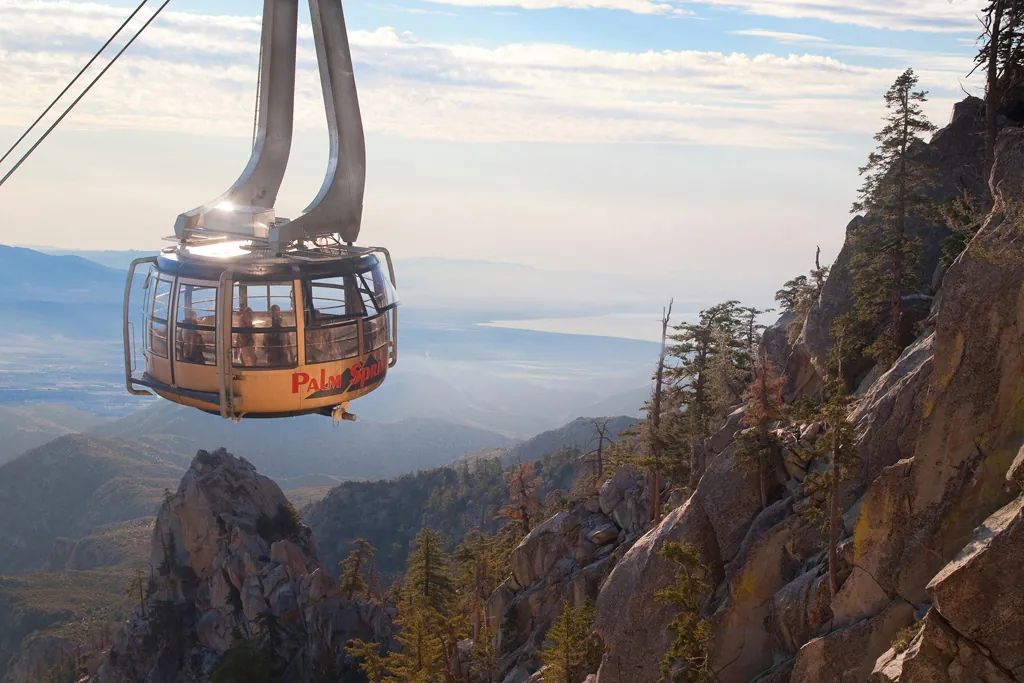
The Aerial Tramway — the world’s largest rotating tram car — carries visitors nearly 6,000 feet up the cliffs of Chino Canyon to the Mountain Station at 8,516 feet. The Valley Station, tram cars, and Mountain Station are all fully wheelchair accessible. The Tramway is a Certified Autism Center™, with trained staff and sensory guides available for 14 locations throughout the facility. Braille signage is available near entrances, elevators, and restrooms. Printed scripts of the tram car narration are available for hearing-impaired guests.
One important note: at the Mountain Station, the outdoor areas of Mt. San Jacinto State Park involve wilderness terrain that is not wheelchair accessible. The Mountain Station building and its immediate surroundings are accessible, but the hiking trails are not.
See full accessibility details →
Palm Springs Walk of Stars
Palm Springs | Free
An outdoor celebrity sidewalk attraction stretching along Palm Canyon Drive, Tahquitz Canyon Way, and Museum Drive in downtown Palm Springs — similar to the Hollywood Walk of Fame, with over 400 stars honoring celebrities with ties to the area. As a street-level outdoor attraction on flat downtown sidewalks, it’s freely accessible to wheelchair users at any time with no tickets or entry required. The stars are flush-mounted in the pavement, with no raised edges to navigate.
See full accessibility details →
Agua Caliente Cultural Museum

Palm Springs | $16–$35
The Agua Caliente Cultural Museum is the official museum of the Agua Caliente Band of Cahuilla Indians, housed in a striking 48,000 sq. ft. facility in downtown Palm Springs. The entire facility is ADA compliant, with accessible entrances, elevators, and wheelchair-accessible exhibit areas throughout. Two complimentary wheelchairs and one walker are available at the Welcome Desk on a first-come, first-served basis — call ahead if you need a wheelchair delivered from the parking lot. All videos are captioned for visitors with hearing impairments.
See full accessibility details →
Desert Holocaust Memorial
Palm Desert | Free
An outdoor public memorial set within Civic Center Park in Palm Desert, featuring seven bronze figures, bas-relief panels, and granite etched with a map of European concentration camps. The surrounding park has paved walking paths, and the memorial’s informational plaques and panels are accessible at ground level. Free admission, open daily.
See full accessibility details →
Palm Springs Art Museum Architecture and Design Center

Palm Springs | Included with Palm Springs Art Museum admission
The Architecture and Design Center is a 13,000 sq. ft. midcentury International Style building in downtown Palm Springs, renovated with accessibility improvements including an elevator connecting the main gallery level to the lower level study center and archive spaces. The building is elevated above street level, so confirming the accessible entry point before your visit is recommended. Admission is included with a Palm Springs Art Museum ticket.
See full accessibility details →
Moorten Botanical Garden
Palm Springs | $5–$10
A beloved family-owned living museum and the world’s first Cactarium, with over 3,000 varieties of desert cacti and plants from around the world. Accessible parking is available near the entrance, and the main garden paths are wide enough for wheelchairs — though paths are sandy and packed dirt rather than paved, and some areas include a slight incline. Wheelchair users may need assistance in certain sections. The accessibility of the Cactarium greenhouse is unconfirmed. Leashed dogs are welcome.
See full accessibility details →
Worth Knowing: Limited Accessibility
A few more venues in the area are worth a visit, with some honest caveats:
Indian Canyons — Accessible routes are available at the Murray Canyon and Andreas Canyon trailheads, where relatively level paths wind through native palm groves alongside a stream. Most other trails are unpaved dirt and not suitable for wheelchairs. Contact the site directly to discuss your specific needs before visiting.
Tahquitz Canyon — The visitor center at the entrance has cultural exhibits and is worth a stop. The main trail, however, gains 350 feet in elevation over rocky, uneven terrain and is not ADA accessible.
Pioneertown — The main attraction is Mane Street, a pedestrian walkway lined with original 1940s movie set facades. The street is generally flat and manageable, though as an open community rather than a ticketed venue there are no formal accessibility programs or services.
Joshua Tree National Park — Vehicle-based touring along paved park roads works well for visitors with limited mobility, and several short accessible trails are available including the Cap Rock Nature Trail. The America the Beautiful Access Pass provides free entry for eligible visitors with permanent disabilities. Most of the backcountry and wilderness trails are not accessible.
Browse the full directory of accessible venues in Palm Springs and the Coachella Valley at OnlyEverywhere.com.