You don’t have to travel with everything. If bringing your own equipment to Orange County isn’t practical — it won’t survive the flight, you only need it for part of the trip, or you need something you don’t own day-to-day — you can rent almost anything once you’re here and have it waiting at your hotel.
The catch is that “mobility rental” covers several different things, run by different kinds of companies, with different lead times — and in OC, the theme parks add a wrinkle worth understanding before you go. Here’s how each one actually works for a visitor.
In this Guide: Scooters & Chairs · WAV Rentals · Medical Gear · Theme Parks · Delivery · Beach Wheelchairs· How to Choose
Wheelchairs, Scooters & Knee Walkers
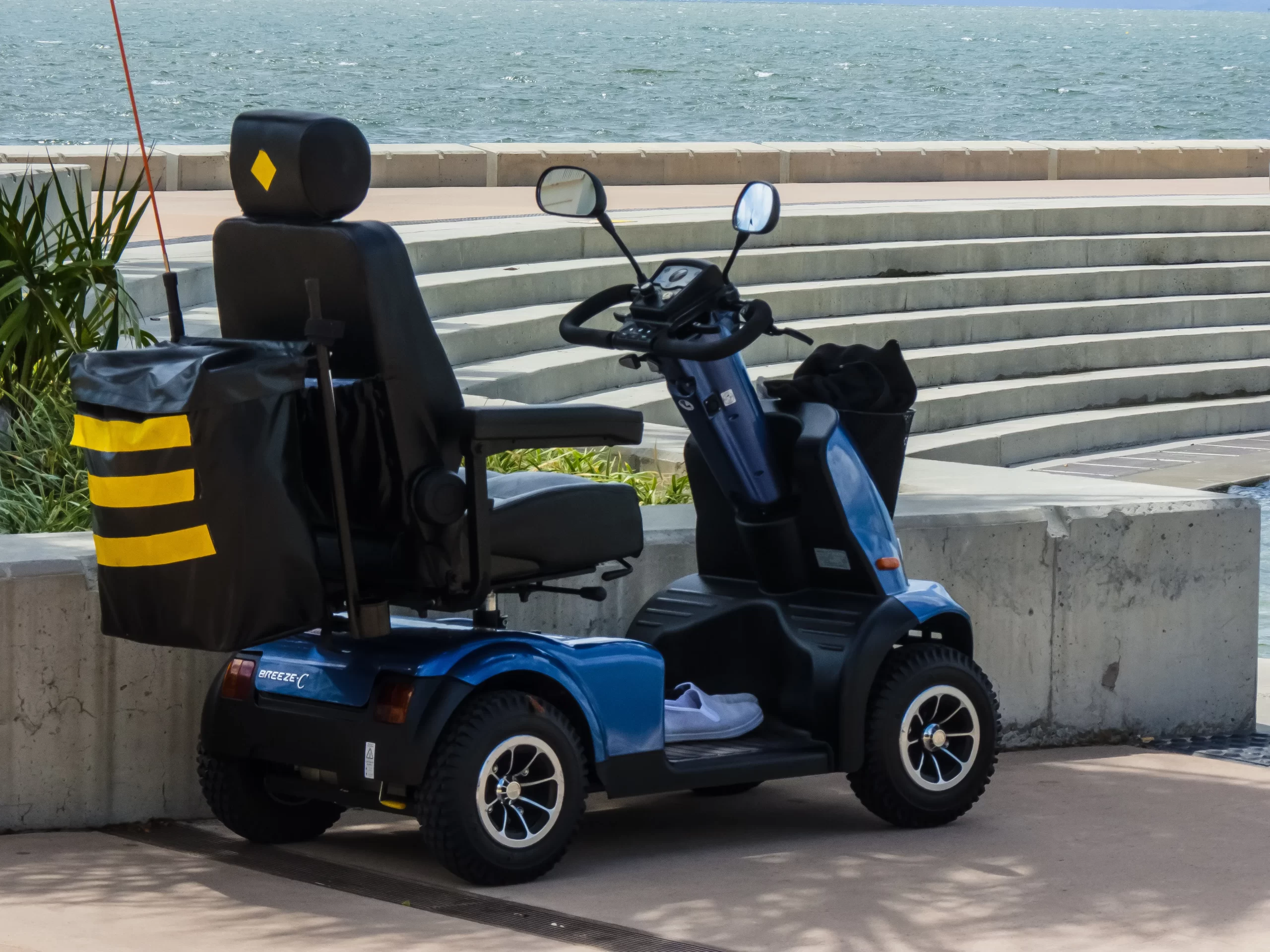
This is the most common rental and the easiest to arrange. National delivery services and local medical-supply shops rent manual wheelchairs, power chairs, mobility scooters, and knee walkers by the day or week, and most will drop the equipment at your hotel before you arrive.
Who Does It:
- Cloud of Goods — wide range (standard and lightweight scooters, wheelchairs, knee scooters), delivers to hotels, vacation rentals, and attractions across Orange County
- Scootaround — national operator; can have a scooter or wheelchair waiting at hotel check-in
- Local Medical Supply shops — across the county rent and deliver mobility aids, often same- or next-day
What to Plan Around:
- Book a few days ahead for the model you actually want — lightweight and heavy-duty scooters sell out faster than standard wheelchairs
- Confirm your hotel will accept the delivery and hold it at the bell desk; many drop off the evening before
- Check the scooter’s weight capacity and whether it disassembles, if you’ll also be loading it into a car
Wheelchair-Accessible Van Rentals
This is the one most visitors don’t realize they need to plan for: you cannot rent a wheelchair-accessible vehicle (WAV) from a standard rental-car counter at John Wayne Airport or anywhere else. Hertz, Avis, and the rest don’t keep ramp- or lift-equipped vans in their fleets. You rent those from specialist companies, and supply is limited — so this is the rental to arrange first, not last.
Who does it:
- MobilityWorks — lowered-floor minivans with fold-out ramps; SoCal locations serving the Orange County area
- Wheelchair Getaways — accessible van rentals serving Southern California
- Wheelers Accessible Van Rentals — LA-area specialist that delivers to the wider region, including OC
- Cloud of Goods — side-entry accessible minivans with delivery in some areas
What to plan around:
- You’re the driver. These are self-drive rentals — you’ll need a valid license, your own auto insurance or a credit card that covers rentals, and comfort driving a modified van. (If you’d rather not drive, that’s what WAV rideshare and OC ACCESS paratransit are for — see Getting Around Orange County.)
- Reserve early. Fleets are small; a last-minute accessible van often simply isn’t available.
- Expect a daily rate well above a standard rental car, with discounts for weekly bookings.
- Confirm the ramp type (side- vs. rear-entry) and that the door height and tie-downs fit your chair.
Medical Equipment for Longer Stays
If you’re in OC for more than a few days, or staying in a vacation rental rather than a hotel, you can rent home medical equipment the same way — delivered and picked up.
What’s available: hospital beds, oxygen concentrators, patient lifts, lift chairs, shower and commode chairs, transfer benches, rollators, and bedside tables.
Who does it:
- Cloud of Goods — medical equipment alongside its mobility line, with hotel, residence, and Airbnb delivery
- Local medical-supply companies across Orange County — hotel and residence delivery, often with same- or next-day options
What to Plan Around:
- Oxygen often requires a prescription — ask the supplier what they need, and note that portable oxygen for the flight itself is arranged separately through your airline (see Flying into SFO).
- Vacation rentals and Airbnbs don’t have a front desk — coordinate a delivery window when someone can receive the equipment.
- Ask about pickup logistics at the end of your stay so you’re not arranging it on departure day.
Theme Parks: The Orange County Special Case
Several of the city’s biggest attractions rent or loan mobility equipment on site, so you don’t have to bring your own juThis is the OC-specific decision, and it’s worth getting right. Disneyland and Knott’s both rent mobility equipment on-site, but with two real limits: the equipment can’t leave the park, and it’s first-come, first-served with no reservations, so it can run out on busy days.
Renting inside Disneyland: at the Stroller Shop near the Disneyland Park main entrance, manual wheelchairs run about $15/day and ECVs about $60/day plus tax (with a refundable deposit; ECV operators must be 18+). A rental can be used across Disneyland Park, Disney California Adventure, and Downtown Disney — but not back at your hotel, and not if they’ve run out.
Renting for your whole trip instead: if you want a scooter you can keep — to use at your hotel, around the resort district, and in the parks — rent from a third-party vendor and have it delivered:
- ScooterBug is Disney’s “Featured Provider” and delivers scooters, wheelchairs, and strollers to the Disneyland Resort hotels for length-of-stay rental (ScooterBug.com/Anaheim · 800-726-8284). Because it’s the featured provider, drop-off and pickup at the Disney hotels is streamlined.
- Cloud of Goods and Scootaround also deliver to Anaheim-area and Good Neighbor hotels.
Knott’s Berry Farm also rents wheelchairs and scooters on-site (first-come, same can’t-leave-the-park rule) — check Knott’s accessibility page for current rates and availability.
A third-party length-of-stay rental usually costs less per day than the in-park rate and isn’t capped to park hours — the tradeoff is you arrange delivery yourself instead of grabbing one at the gate. For a multi-day Disneyland trip, that’s almost always the better call.
Delivery to Hotels, AirBNBs & SFO
Mostly clean SF content, but it was built off the LA rentals page and three LA leftovers slipped through, plus one slug issue that matters more:
How it Works in Practice:
- Hotels: Equipment is typically dropped at the bell desk the evening before or the morning of your rental, under your reservation name; you collect it at check-in. Confirm your specific hotel accepts and stores deliveries.
- Airbnbs & Vacation Rentals: No bell desk — coordinate a delivery window with the provider for a time someone can receive and sign for the equipment.
- SFO: Some providers deliver to the airport or a nearby hotel for your arrival. Build in buffer time — airport delivery coordination is the step most likely to slip. See Flying into SFO.
Beach Wheelchairs: Also a Rental (Usually Free)
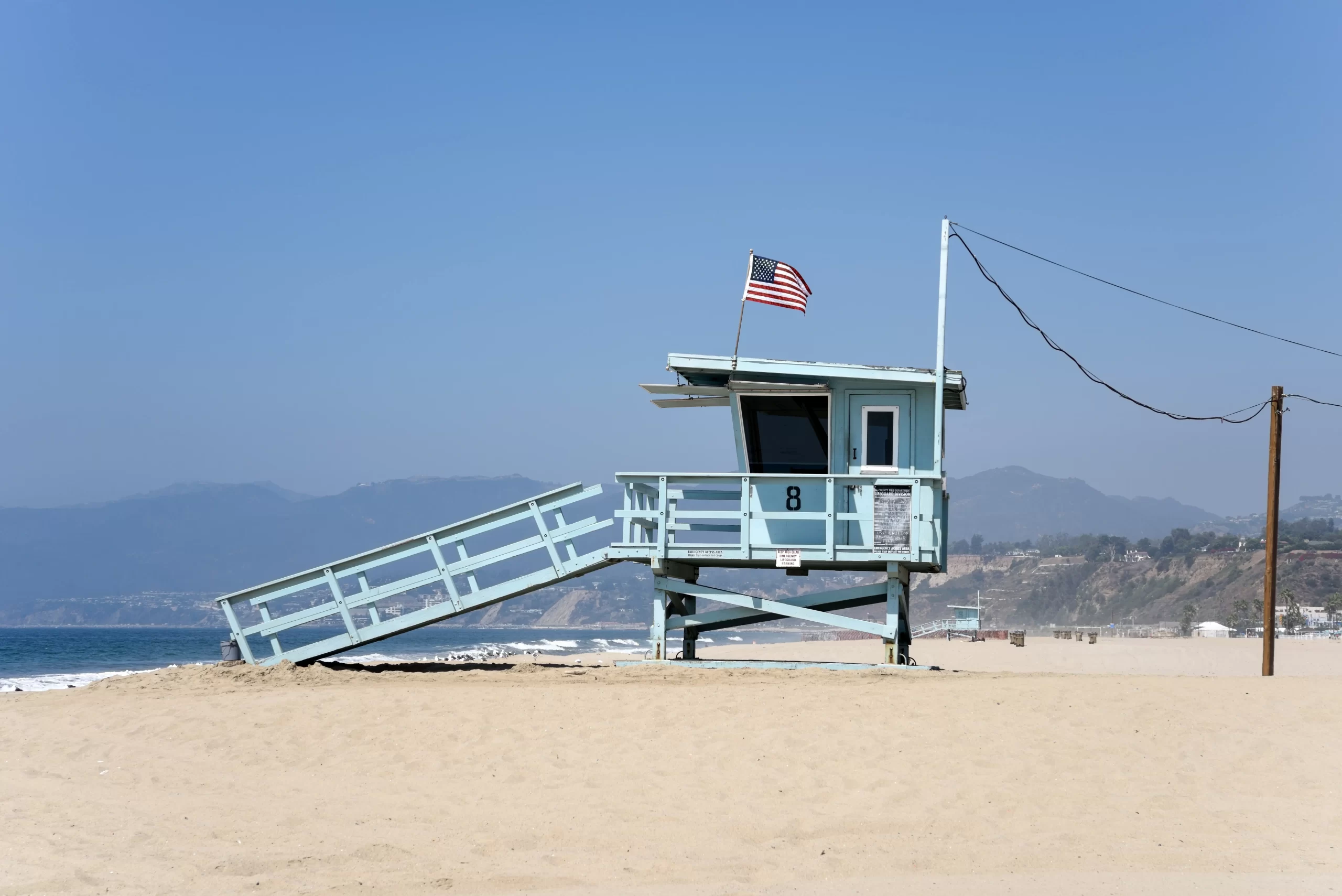
OC’s coast has its own equipment story. Getting onto the sand needs a beach wheelchair (wide-tire, sometimes powered), and several OC beaches keep them — often free, on loan at the lifeguard headquarters or by reservation.
- Balboa Beach, Crystal Cove, Doheny State Beach, Huntington State Beach, and Newport Beach all document beach wheelchairs or loaner mobility aids
- David’s Chair, a nonprofit, supplies powered beach wheelchairs at some OC beaches (including in Newport) at no charge — reserve ahead through its site
- Availability is often seasonal and staff-dependent, so call the beach or reserve before you go; see each beach’s listing in the Beaches & Outdoors guide
How to Choose — The Short Version
| You need… | Rent from | Book ahead? |
|---|---|---|
| Wheelchair, scooter, or knee walker | Delivery service (Cloud of Goods, Scootaround) or local supply shop | A few days; sooner for specialty models |
| A van you’ll drive yourself | Accessible van specialist (MobilityWorks, Wheelchair Getaways) | As early as possible — limited fleet |
| Beds, oxygen, shower chairs for a longer stay | Medical-supply rental with delivery | A few days; ask about prescriptions |
| A scooter for a full Disneyland trip | ScooterBug or another third-party vendor, delivered — not the in-park rental | Before you travel |
| Onto the sand at the beach | The beach’s loaner program or David’s Chair | Reserve ahead; seasonal |
A few rules that apply across the board:
- Reserve early — accessible vans and specialty scooters are the first to run out.
- Confirm your hotel or rental will accept the delivery and hold it.
- For self-drive vans, sort out insurance before you book.
- For the parks, a delivered length-of-stay rental beats the first-come in-park rate on a multi-day trip.
Prices, delivery areas, and availability change, and Only Everywhere isn’t affiliated with any company listed here — always confirm details directly with the provider before you book.